
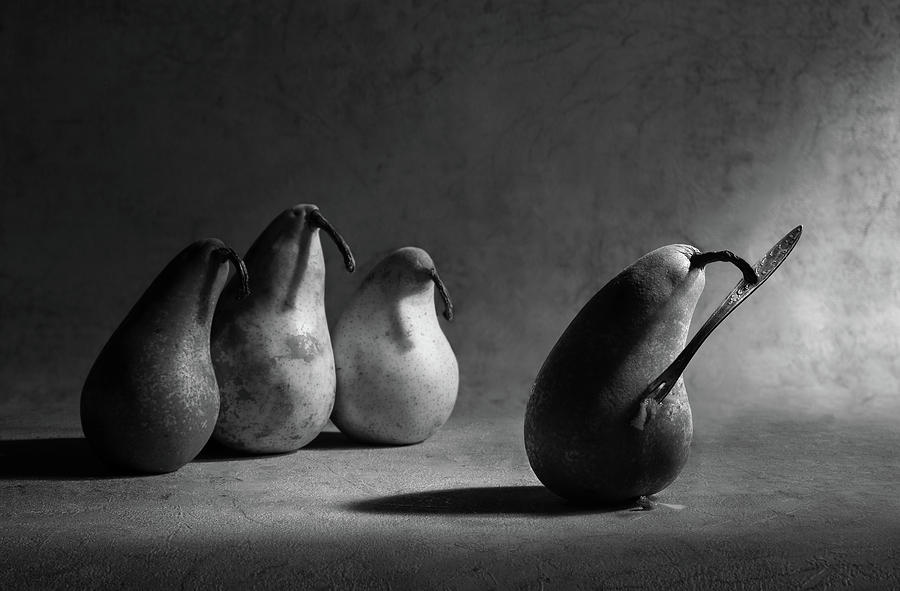
The Stoic philosopher Seneca argued that suicide is a reasonable means for liberating oneself from an otherwise inescapable and unbearable life.[i] In the pursuit of mental tranquillity (ataraxia), death can end dysphoria. Suicide is a powerful control we have over our freedom. But how much control do we really have over our death? If suicide entails a lack of control, is that problematic for Seneca’s proposed solution to an insufferable life?
Liberation & Tranquillity
The Stoics suggest that we focus on those things in life we can control. They believed that some things can be decided by us, while other things are decided for us (whether by nature or the gods). The aspects of your life which you can change for the better, should be improved upon. The aspects of your life which you can’t influence need to be accepted as being out of your control. Ultimately, you should develop a sense of calm and indifference (apatheia) towards whatever is uncontrollable and be active with whatever you control. Death is something we seem to have some control over.
In his dialogues, Seneca argues that death isn’t something we ought to fear.[ii] We shouldn’t fear death because it is a) inevitable and b) there is no posthumous suffering. The time and means of our death can be something within our control, however, as we can (to a certain degree) decide to end life prematurely. As such, when an individual cannot gain control over their misery, they can put an end to their suffering with the penultimate choice of ending their life.
Wherever you turn your eyes you may see an end to your woes. […] Do you ask what path leads to liberty? I answer, any vein in your body.[iii]
Suicide is an ever-present means of liberation from dysphoria.

A Tale of Two Deaths
An argument could be made, however, that we do not have the kind of control over our death suggested by Seneca. Blanchot argues that, ‘He who includes death among all that is in his control controls himself extremely.’[iv] However, in The Space of Literature, Blanchot proposes that there are two deaths : the personal and the impersonal.[v]
Personal death is the loss of one’s life, but the second, impersonal death goes beyond one’s wants and desires, beyond the individual. Upon the approach of impersonal death, individual free choice ends. The second death is ungraspable because it is a death, not one’s death.[vi] As Blanchot puts it, ‘It is that which never comes and toward which I do not direct myself.’[vii]
Although suicide seems like an extreme form of control over oneself and one’s liberty, it is also the approach of a death that is unknowable – an extreme loss of control.
Liberation versus Control
Does this complicate Seneca’s proposal that suicide should be considered as taking control of one’s liberty in the face of bondage and suffering? I would argue that this is not the case. Arguably, the loss of control in becoming capable of the act would not worry Seneca. If there is a point at which control must be relinquished to attain tranquillity then that is acceptable. Indeed, whether one controls their death is not the chief focus for Seneca. Rather, it is achieving liberty from whatever is keeping us from psychic calm that needs to be removed through apatheia. The extirpation of fear through apatheia would undoubtedly include the fear of losing control in the face of death. Indeed, death is not to be feared, whatever its guise. We should accept that we will die, whether it is brought forward or simply occurs.
References
[i] L. Annaeus Seneca, Minor Dialogs Together with the Dialog “On Clemency”, trans. Aubrey Stewart (London: George Bell and Sons, 1900), pp.133-34.
[ii] Seneca, Dialogues and Letters, ed. & trans. C. D. N. Costa (London: Penguin Books, 1997, 2005), p.89.
[iii] Seneca, Dialogs , pp.133-34.
[iv] Blanchot, Maurice, The Space of Literature, trans. Ann Smock (University of Nebraska Press, Lincoln: 1982), p.91.
[v] Gilles Deleuze, Difference and Repetition, trans. Paul Patton (Bloomsbury, London: 2014), p.143.
[vi] Gilles Deleuze, Coldness and Cruelty, trans. Jean McNeil (Zone Books, New York: 1991), p.117.
[vii] Blanchot, Maurice, The Space of Literature, trans. Ann Smock (University of Nebraska Press, Lincoln: 1982), p.104.
Bibliography
Blanchot, Maurice, The Space of Literature, trans. Ann Smock (University of Nebraska Press, Lincoln: 1982).
Deleuze, Gilles, Coldness and Cruelty, trans. Jean McNeil (Zone Books, New York: 1991).
Deleuze, Gilles, Difference and Repetition, trans. Paul Patton (Bloomsbury, London: 2014).
Seneca, L. Annaeus, Minor Dialogs Together with the Dialog “On Clemency”, trans. Aubrey Stewart (London: George Bell and Sons, 1900).
Seneca, Dialogues and Letters, ed. & trans. C. D. N. Costa (London: Penguin Books, 1997, 2005).
Featured Image: ‘The Harakiri’ by Victoria Ivanova
Further Reading
Blanchot, Maurice, The Station Hill Blanchot Reader, trans L Davis, P Auster, R Lamberton (Barrytown Ltd, New York: 2000).
Holland, Michael, The Blanchot Reader, ed. M Holland (Blackwells, London: 1995).
Sellars, John, Stoicism (Routledge, London: 2014).
Sellars, John, Lessons in Stoicism: What Ancient Philosophers Teach Us About How to Live (Penguin, London: 2020).
Support
If you are affected by any of the issues discussed in this blog entry, please visit the following links for help and guidance:
Samaritans | Every life lost to suicide is a tragedy | Here to listen
Get Help & Support With… | Campaign Against Living Miserably (CALM) (thecalmzone.net)
Depression Test – Free mental health tests from Mental Health America (mhanational.org)
Useful contacts – suicidal feelings – Mind
Andy’s Man Club | #ITSOKAYTOTALK | Andy’s Man Club (andysmanclub.co.uk)
If you feel that you are a danger to yourself, call the emergency services (UK: 999).
If you are struggling with thoughts of suicide, depression or other mental health concerns, consider calling the Samaritans on 116-123.
 Death and Happiness